Environmental sustainability
We build on what already exists and let it form the foundation for the next chapter. Our ambition is that every project, place and decision contributes to a city that is resilient to future challenges and enables people to live sustainably.
Focus areas, targets and key activities
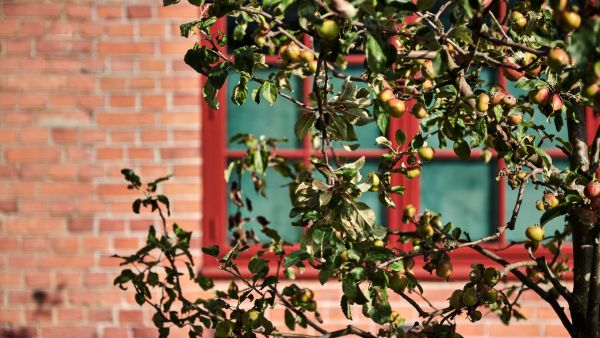
Reduced climate impact
We work long-term to reduce our emissions across the entire value chain, from planning and construction to management and use. Through energy efficiency measures, renewable energy and conscious material choices, we reduce climate impact in both projects and existing properties. A systematic approach to climate calculations enables us to identify the measures that have the greatest effect.
Our main target is to reach net zero emissions by 2040, with a 50 per cent reduction by 2030 (base year 2023).
- Key activities
- Sub-goal
- Energy savings (purchased property energy)
- -40% by 2030 (vs 2023), kWh/sqm
- Climate impact in projects (life cycle analyses, stages A–C)
- -75% by 2030 (vs 2021), kg CO2e/GFA
- Climate impact in property management (energy, waste, materials, transport)
- -43% by 2030 (vs 2021), kg CO2e/Atemp
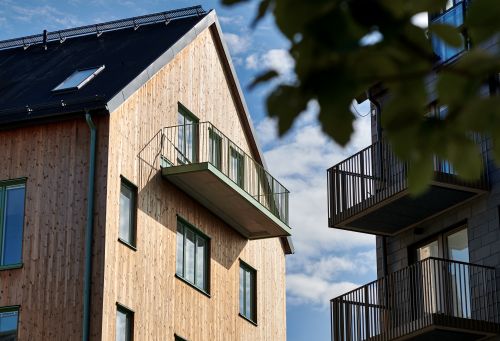
Increased resource efficiency
We prioritise circular and resource-efficient solutions. Through reuse, improved sorting and reduced waste, we create more sustainable material use. We work closely with suppliers, contractors and tenants to increase the share of circular materials and reduce resource consumption over time.
Our main target is 20 per cent circular material use by 2030 in new construction, refurbishment and tenant adaptations.
- Key activities
- Sub-goal
- Reduced waste
- -20% less waste to landfill and energy recovery (vs 2024)
- Water savings
- -20% by 2030 (vs 2023), m³/sqm
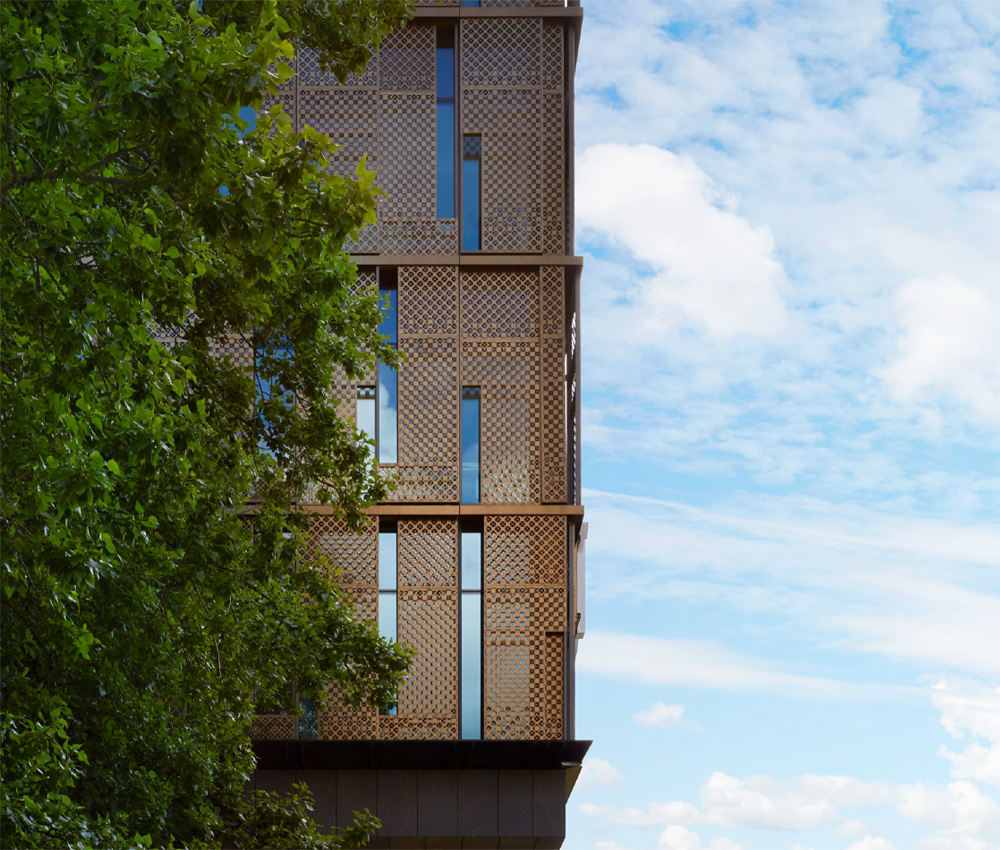
Positive impact on biodiversity
Our responsibility also extends to the land we use. In our projects, we integrate greenery and ecosystem services to support richer plant and animal life and strengthen the resilience of urban districts to future climate challenges. Through mapping and locally adapted measures, we ensure that our places not only take from nature, but also give back.
Our main target is to achieve a positive environmental impact from our land use by 2030. Mapping of biodiversity will be carried out in 2026, with the ambition of defining methodology and sub-targets.

