Human City Index
People are drawn to places where they feel welcome and included, where proximity to services and green spaces reduces stress, and where urban life is present throughout the day. For us, social sustainability is therefore part of the business. When people enjoy spending time in our areas, their attractiveness increases, creating strong customer flows, long-term tenant engagement and vibrant urban districts over time.
And we don’t stop at how it feels – we measure it.
A tool to measure and develop the human value of cities
Cities have long been designed based on what is easy to measure – square metres, flows and efficiency. But what truly makes a city vibrant and sustainable is something else: how it is experienced by the people who spend time there.
Human City Index is Atrium Ljungberg’s tool for measuring what is often said to be hard to measure but easy to feel – safety, accessibility, greenery, place identity and participation. The index provides concrete insights that enable the development of places where people want to live, work, meet and spend time.
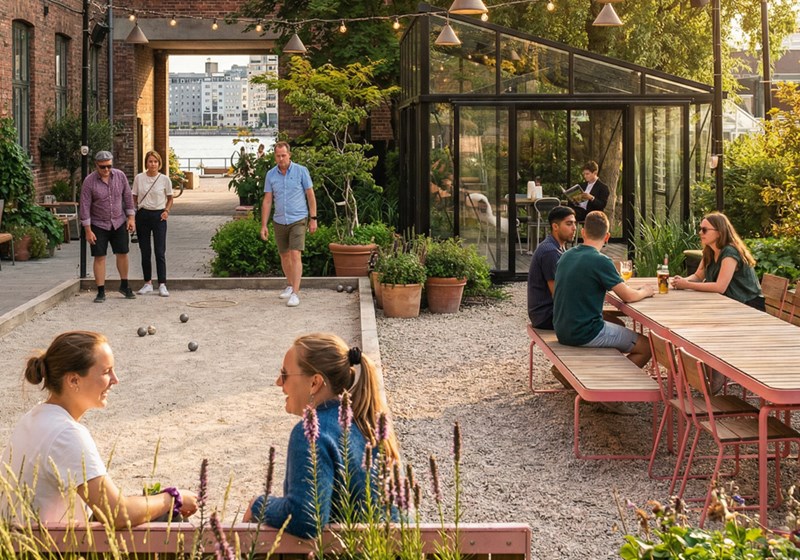
Why Human City Index?
- The index makes social sustainability measurable and action-oriented
- It creates a shared language and clarity
- It connects people’s experiences to business value and long-term value creation
- It helps us prioritise the right actions in the right places
Our ambition is clear: by sharing the tool, we want to contribute to increased knowledge of how cities impact people’s lives – and how we can improve them together.
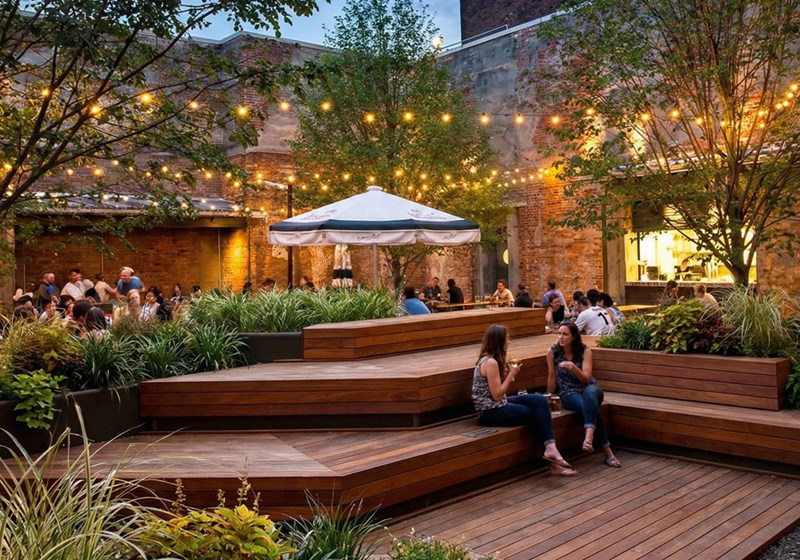
What does Human City Index measure?
The index is based on five dimensions and underlying indicators that together capture the human aspects of a city – areas where urban developers and property owners can make a real difference.
01.
Safe to be in.
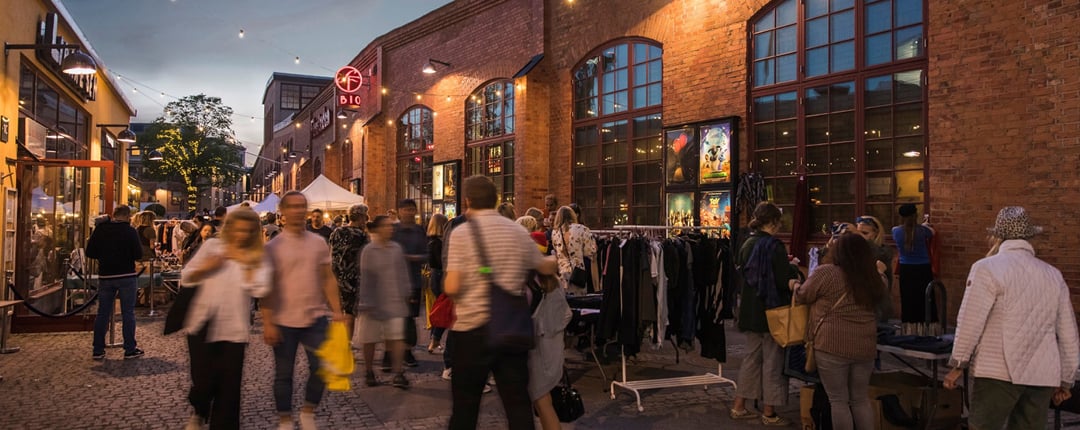
A city where people feel safe, day and night. We measure perceived safety, active ground floors, opening hours, the balance between day- and night-time populations, and crime statistics.
02.
Makes life easier.
A city where everyday life flows smoothly. This includes access to recreational areas, mixed-use functions, public meeting places, perceived wayfinding and the possibility of sustainable modes of transport.

03.
Close to nature.
A city that allows for recovery and resilience. We measure greenery, ecosystem services, perceived microclimate and climate adaptation – factors that affect both wellbeing and long-term resilience.

04.
A place with a soul.
A city with identity, life and character. We track how the place’s identity is perceived, visitor levels, place activation and whether people feel welcome.

05.
Created together.
A city shaped with the people who live there. We measure dialogue, feedback and collaboration to ensure participation, engagement and shared responsibility.


How Human City Index works
Human City Index combines quantitative and qualitative data – mapping, statistics, surveys and analysis – to provide an overall picture of how a place functions from a human perspective. In total, 21 indicators are measured and compiled into an overall result. This shows the current state and enables tracking of development over time.
And measurement is only the beginning. The results are then translated into concrete action plans. It is through systematic follow-up and continuous improvement that real change happens.
Open for everyone to use
Atrium Ljungberg has chosen to make Human City Index freely available for anyone to use. The ambition is to strengthen the shared understanding of how different actors influence social sustainability in cities – and to contribute to more transparent and knowledge-driven development across the industry.
The material includes everything from an open methodology description and clear definitions of the included dimensions and parameters, to a step-by-step guide and ready-to-use survey templates.
Download Human City Index here – currently available in Swedish only
Want to know more? Feel free to get in touch!